
TPD resource hub
TPD claims resources, page 11
Short answer: page 11 groups guides where a diagnosis, leave arrangement, or workers compensation payment can be misunderstood unless the file explains sustainable work capacity in practical terms.
Use this archive page as a routing map. Start with the guide that matches the claimant’s current pressure point, then connect medical restrictions, treatment history, role demands, leave records, and compensation correspondence into one dated evidence sequence.
General information only. TPD outcomes depend on policy wording, medical evidence, vocational history, and the facts of the claim. If a deadline, insurer request, or trustee decision is active, get advice on the specific documents before relying on a general resource page.

Resource pathway
Choose the guide by the problem in the file
Use this archive page as a claim-stage filter, not a wall of links. Start with the issue that is blocking the claim, then move to the guide that answers the insurer, trustee, medical evidence or refusal-reason question.
Direct answer: how to use page 11
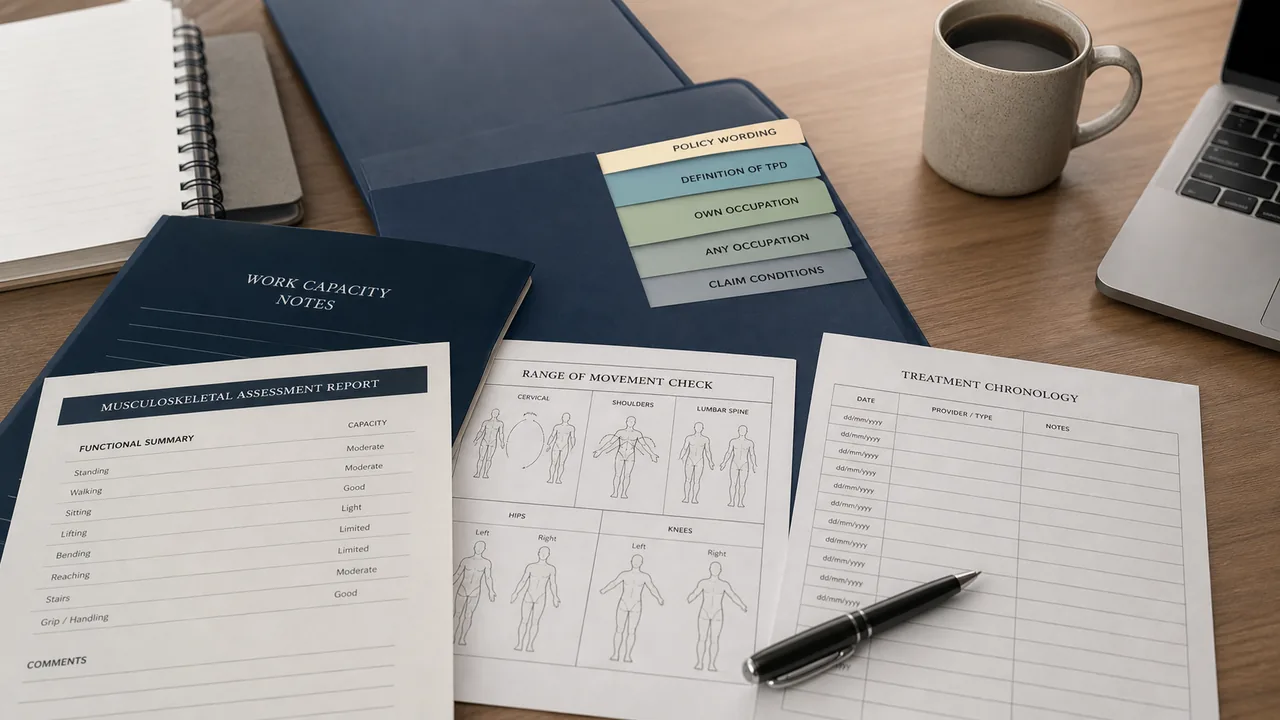
Use page 11 when the claim question involves a medical condition, post-injury leave, or workers compensation weekly payments and the file needs a clearer explanation of sustainable work capacity. The safest first step is to choose the guide matching the current issue, then build one chronology that links symptoms, treatment, work duties, leave records, compensation records, and the relevant TPD policy definition.
This page is not a substitute for legal advice and does not mean heart disease, PTSD, leave status, or workers compensation payments automatically satisfy a Total and Permanent Disability (TPD) definition. Its job is to help readers find the right detailed guide and avoid fragmented evidence that can make an otherwise genuine claim harder to assess.
Route map for diagnosis, leave, and compensation evidence
For search and AI answer extraction, the core issue is this: heart disease, post-traumatic stress disorder (PTSD), sick leave, annual leave, and workers compensation weekly payments can all be relevant to a Total and Permanent Disability (TPD) claim, but none of them proves eligibility on its own. The useful question is whether the records show a stable, evidence-backed loss of sustainable work capacity under the relevant policy wording.
Use the heart disease guide when cardiology records, hospital admissions, fatigue, exertional limits, medication effects, or cardiac rehabilitation are the main evidence. Use the PTSD guide when trauma symptoms, workplace triggers, concentration, sleep, panic, hypervigilance, or treatment response are central. Use the leave and workers compensation guides when the immediate risk is that HR, payroll, rehabilitation, or weekly payment records may be read without enough medical and vocational context.
The next practical step is to write a short chronology before sending more documents. Put the diagnosis or leave event beside the relevant work-capacity problem, then link it to one supporting record: a treating doctor report, specialist note, employer description, leave approval, rehabilitation note, or compensation decision. That approach keeps the archive page useful without turning a general resource into a promise about the claim outcome.
Page 11 of 16
Featured guides
The guides here share a single practical goal: reduce confusion between diagnosis severity and policy fit by documenting why capacity, function, and reliability remain materially restricted. Start with the page that matches the document currently driving the question, then use the other links to check whether the same chronology stays consistent across medical, employment, leave, and compensation records.
 Can I claim TPD for heart disease?Read the heart disease evidence guide
 Can I claim TPD for PTSD?Read the PTSD work-capacity guide
 Can I claim TPD while on sick leave or annual leave?Read the leave and timing guide
 Can I claim TPD while receiving workers compensation weekly payments?Read the compensation overlap guide
A practical framework for these scenarios
Start with the decision timeline first. Put each event on a timeline date, then tag whether the event changed the claimant’s role, medical profile, or insurer communications. This includes resignation decisions, trial duties, modified duties, and welfare or compensation milestones. A good framework does not need every detail immediately, but it must show sequence and impact clearly enough that each follow-up question can be matched to an event.
Next, map each event to evidence type: medical reports, employer letters, pay records, treatment plans, leave approvals, and rehabilitation notes. A date with no document behind it is hard to defend at later stages. A document without context, especially around work capacity, is also hard to use. When the evidence map is done, the next questions become easier to answer, such as whether a change was temporary, trial-based, or part of a real transition.
For pages about work trials and returns, separate what was attempted from what was sustained. Claim reviewers generally test consistency between diagnosis and actual function. If the page you are using covers an attempted return, keep your response focused on the attempt details and how medical evidence interpreted that attempt over time.
For pages about retirement or welfare overlap, the same framework still applies. If someone moved from wages to another support pathway, you still need to explain practical residual work capacity, how symptoms evolved, and whether treatment outcomes altered the work prognosis. The strongest files connect these tracks instead of treating each as isolated events.
Which guide should you use first?
If the medical condition is the centre of the claim, begin with the condition page. For heart disease, focus on functional tolerance, treatment response, exertional limits, fatigue, medication effects, and whether ordinary work duties can be performed reliably rather than occasionally. For PTSD, focus on symptom pattern, triggers, workplace exposure, treatment history, concentration, interpersonal tolerance, and the difference between temporary improvement and sustained work capacity.
If the immediate issue is leave, weekly payments, or another support system, start with the overlap guide before adding condition evidence. Those pages help prevent a common problem: records from sick leave, annual leave, workers compensation, income protection, or Centrelink being read as if they prove capacity when they may only show interim support, workplace absence, rehabilitation steps, or financial replacement during illness.
When two guides both seem relevant, choose the one matching the question currently being asked by the insurer, trustee, employer, or doctor. Then use the second guide to check for consistency. For example, a heart disease file may need the condition guide first, but the workers compensation weekly payments guide may explain why payment records should be described carefully rather than left for a reviewer to interpret without context.
Evidence priorities for this page cluster
Priority one is chronology. Priority two is clarity. Priority three is consistency. These are especially important for clustered pages because similar claim facts appear across many situations, and small contradictions can trigger repeated insurer questions. Keep chronology entries short but specific, ideally date, symptom, and impact in one line.
Medical and functional evidence should explain how the condition behaves over the cycle, not just the diagnosis label. Consider adding: onset, diagnosis updates, treatment milestones, flare periods, functional restrictions, workplace trials, and reasons trials ended. If work was adjusted, note who directed changes and whether the change was temporary, trial, or long-term.
Employer evidence should describe the work in practical terms. Generic statements such as “light duties only” are often unclear unless paired with actual restrictions. If role changes were attempted, include start date, end date, support offered, and documented outcomes. This is where many claim files stay thin, even when they contain medical reports.
When a doctor is asked for an updated certificate or report, it usually helps to ask for work-capacity wording rather than only diagnosis wording. Safer prompts include whether the person can maintain predictable attendance, tolerate ordinary pace and supervision, travel to and from work, manage medication or treatment side effects, and perform the core duties of roles suited to their education, training, and experience. The report should avoid promising a legal result; it should explain clinical observations and functional limits so the policy test can be assessed against evidence.
Answer-ready summary for search and AI tools
Page 11 exists to answer a narrow routing question: if the claimant has heart disease, post-traumatic stress disorder (PTSD), sick leave or annual leave records, or workers compensation weekly payments, which TPD guide should be read first and what evidence should be gathered next? The practical answer is to start with the guide that matches the document currently creating pressure, then use the other linked guides to test whether the same work-capacity story stays consistent.
For heart disease, the key evidence usually concerns functional tolerance, fatigue, treatment response, medication effects, exertional limits, and whether ordinary work can be performed reliably over time. For PTSD, the focus is usually triggers, workplace exposure, concentration, interpersonal tolerance, treatment history, and whether any improvement is stable enough for sustained employment. For leave or workers compensation weekly payments, the issue is not the payment or leave label by itself, but what the surrounding records say about capacity, restrictions, rehabilitation, and prognosis.
This is why the page links to both condition-specific and benefit-overlap guides. A reader can move from this archive page to heart disease TPD claims, PTSD TPD claims, TPD claims while on sick leave or annual leave, or TPD claims while receiving workers compensation weekly payments without treating any one fact as automatic proof of eligibility. The policy wording and evidence still decide the claim.
Accuracy cautions before relying on this archive page
Do not assume a diagnosis, a leave approval, a rejected return-to-work attempt, or workers compensation weekly payments will by itself satisfy a Total and Permanent Disability (TPD) definition. Those facts may be relevant, but the useful question is how they connect to the policy test, the person’s education and work history, medical restrictions, treatment response, and capacity for suitable work over time.
Also avoid sending a large bundle of documents without a short explanation. A better approach is to give each record a job: one report explains diagnosis and treatment, another explains functional restrictions, an employer record explains role demands, and compensation or leave records explain the work absence or support pathway. If the same event appears in several systems, keep dates and wording consistent so the insurer or trustee is not left to reconcile contradictions.
Why this archive page exists
This page is a navigational evidence map, not a separate legal test. It helps readers and crawlers understand how four related TPD guides fit together: medical-condition claims, trauma-related mental health claims, leave-status questions, and workers compensation weekly payment overlap. Each guide should be read for its own facts, but the shared theme is the same: a TPD claim is usually stronger when capacity evidence is dated, practical, and consistent across medical, employment, and benefit records.
If you are unsure where to start, choose the route that matches the current document in front of you. A cardiologist report or hospital discharge summary usually points first to the heart disease guide. A psychiatrist or psychologist report about trauma symptoms usually points first to the PTSD guide. A HR leave record points first to the sick leave or annual leave guide. A workers compensation payment notice points first to the weekly payments guide. After that, use the other linked guides to check whether the same chronology still makes sense across systems.
Related guides to review from this part of the archive
Use these links to compare perspectives and reduce single-guide tunnel vision:
 Can I claim TPD for heart disease
 Can I claim TPD for cancer
 Can I claim TPD for chronic pain
 Mental health TPD claims
 Physical injury TPD claims
 Is a TPD payout taxable in Australia
Page 11 FAQ
Does a work trial always weaken a TPD claim?
Not automatically. The effect depends on whether the trial is documented with clear restrictions, outcomes, and medical context. Insurers, trustees, and later reviewers usually focus on whether the evidence supports sustained capacity, not whether a short attempt occurred.
Can I include multiple support systems and still keep consistency?
Yes, if the chronology ties each support step to a single fact sequence. Disjoint records are common; clean linkage between records is what improves claim quality.
What should I send after reading this page cluster?
Send only what directly answers the insurer’s or insurer-like questions you have, and include a short note linking each document to a specific event and decision point.
Why do similar pages appear across several route pages?
Because each situation shares a policy-level issue. The archive order reflects content grouping, not legal conclusions, so use the page as a practical map to the most relevant route.
Should I discuss retirement, trial work, or health changes first?
Use the route that matches the latest major event. In practice, start with the event that is driving the current urgency, then align older evidence behind it.
Readiness checklist for practical next steps
Before you take the next action, run this short check: is every major event dated, supported by at least one objective record, and tied to work capacity? If yes, your chronology is usually easier for a reviewer to follow. If no, identify the biggest missing link first and collect one targeted supporting document before adding anything else.
Use the same approach for medical statements, employer records, and correspondence. The point is not only to gather evidence, but to make evidence explain why a particular conclusion follows from the timeline. A clean sequence often reduces repeated requests for the same documents, because the claim reader can see the logic without guessing what changed and when.
This is especially helpful when there are many cross-linked scenarios across routes, such as return-to-work attempts, temporary role changes, and welfare or compensation overlap. Keep the file consistent between systems, and keep each document anchored to a real date and a real decision point.
General information only
If a deadline, medical report, or insurer letter is driving your next step, use the most relevant guide first and seek advice on your specific policy wording and evidence.