
Can I claim TPD after a short return to work on reduced duties?
By Herman Chan, Stephen Young Lawyers · Updated 13 May 2026
Short answer
In many cases, yes. A short, modified return to work does not automatically stop you from making a Total and Permanent Disability (TPD) claim. The practical question is whether the attempt showed sustainable work capacity or whether it was a limited rehabilitation trial that failed despite treatment, reduced hours, restricted duties, and workplace support.
Decision-makers usually focus on whether the work attempt was sustainable in the real labour market, whether duties were heavily accommodated, and whether medical evidence supports ongoing incapacity under your policy wording. A reduced-duties period can support a TPD claim when the records show the person could not reliably maintain attendance, output, safety, or recovery over an ordinary working week.
What hurts claims is not the attempt itself; it is poor chronology, inconsistent language, or records that accidentally make the attempt look like a full recovery. The safer evidence theme is simple: the person tried to work, the duties were not ordinary duties, the arrangement was not sustainable, and the current medical evidence explains why the relevant TPD definition is still met.
Who this page is for
This guide is for Australian workers who tried to return after injury or illness on reduced duties, restricted hours, lighter tasks, or a staged rehabilitation plan, then had to stop again. It is especially relevant if the super fund, insurer, employer, rehabilitation provider, or another scheme such as workers compensation has records saying you were "back at work" even though the arrangement was temporary or heavily modified.
The central question is not whether you performed any task at all. The safer way to frame the evidence is whether you could reliably keep doing suitable work, at commercially realistic hours and productivity, without special accommodation that would not normally be available in open employment. That distinction should appear early in your chronology, doctor reports, employer material, and claim forms.
Why a short work attempt can still fit a TPD claim
Most TPD policies are not designed to punish people for trying to return to work. In practice, funds, trustees, and insurers know people may attempt phased duties before symptoms or functional restrictions force them to stop again. A short return can actually provide useful evidence when it shows:
- you required major duty modification, reduced hours, or close supervision;
- attendance or output could not be maintained reliably;
- symptoms worsened or did not improve despite treatment;
- the arrangement depended on accommodation not usually available in open employment.
For "own occupation" definitions, the key question is often whether you can return to your pre-disability occupation in a realistic and sustainable way. For "any occupation" definitions, the focus is broader, but sustainability and practical work capacity still matter. A short reduced-duties period may be consistent with either definition if your evidence explains why long-term capacity was not restored.
What the claim file should make clear early
Before the file gets buried in certificates and rehabilitation notes, the first summary should answer four concrete questions. What were your normal pre-injury duties? What exactly changed during the reduced-duties period? Why could the arrangement not continue? Which parts of the TPD policy definition does the medical and employment evidence now support?
For example, a useful summary might explain that lifting, driving, client-facing tasks, production targets, concentration-heavy work, shift length, or attendance expectations were removed or reduced. It should then connect those changes to objective records such as capacity certificates, rosters, leave records, employer emails, rehabilitation-provider notes, and treating-specialist reports.
This is especially important where another record only says “returned to work”. That phrase can be misleading unless the surrounding evidence explains that the return was short, conditional, supported, restricted, or followed by relapse. Clear context helps searchers, advisers, and decision-makers distinguish a genuine failed trial from a durable return to ordinary paid work.
What assessors usually test
How long the return lasted and how demanding it was
Assessors look at how long the return lasted, weekly hours, and whether duties expanded over time or collapsed quickly. A four-week heavily modified trial is usually viewed differently from six months of stable unrestricted duties.
How much special accommodation was needed
They test whether you worked under special arrangements: seated-only tasks, no lifting, extra breaks, flexible start times, reduced productivity targets, redistribution of core duties, or direct assistance from colleagues. If the arrangement was atypical, record that clearly.
Why the work stopped again
You should be able to point to objective reasons: symptom flare, unsafe fatigue, repeated absence, treatment escalation, specialist restriction, or inability to perform core duties even with modifications. Vague statements like "it didn't work out" are weak.
Whether the medical record matches the timeline
Treating-doctor and specialist records should align with the work timeline. If records say "improving" while you describe major decline, assessors may treat the file as inconsistent. Consistency does not mean perfect wording; it means records and timeline tell the same practical story.
Whether the evidence actually answers the policy definition
Your evidence should answer the actual policy question, not a general health question. Many avoidable delays occur because claimants submit large volumes of records that do not directly explain how restrictions map to policy wording.
Evidence architecture that usually works better
A strong file is structured, not random. For this scenario, useful evidence commonly includes:
- Timeline table: injury/illness onset, treatment milestones, return-to-work start date, duty changes, relapse points, final cessation date.
- Employer confirmation: letter or records describing modified duties, hours, accommodations, attendance issues, and why the arrangement ended.
- Medical opinion linked to function: reports that explain what you can and cannot do consistently over a full week, not diagnosis labels alone.
- Capacity-vs-reliability evidence: examples showing isolated good days did not translate into sustainable work attendance or output.
- Cross-claim consistency: if workers compensation or income protection is involved, ensure major facts (dates, duties, reasons for stopping) match across files.
Where possible, ask treating clinicians to use practical language: lifting tolerance, sitting/standing limits, concentration durability, medication side effects, symptom triggers, and expected recovery trajectory. This makes the report easier to apply to policy tests.
Common mistakes that create avoidable risk
- Accidental "full recovery" wording: one optimistic phrase in a certificate can be used against the broader file if not clarified.
- No detail on modified duties: if records only say "returned to work," assessors may assume normal duties resumed.
- Ignoring attendance data: sporadic attendance often supports incapacity, but only if records are retained and explained.
- Submitting too early: lodging before specialists explain permanency, prognosis, or sustainable capacity can trigger delay cycles.
- Inconsistent dates across forms: date drift across super, insurer, GP, and employer documents can undermine credibility.
- Overstating capacity or incapacity: exaggerated claims are risky either way; practical, evidence-based language is safer.
How to explain the short return-to-work period clearly
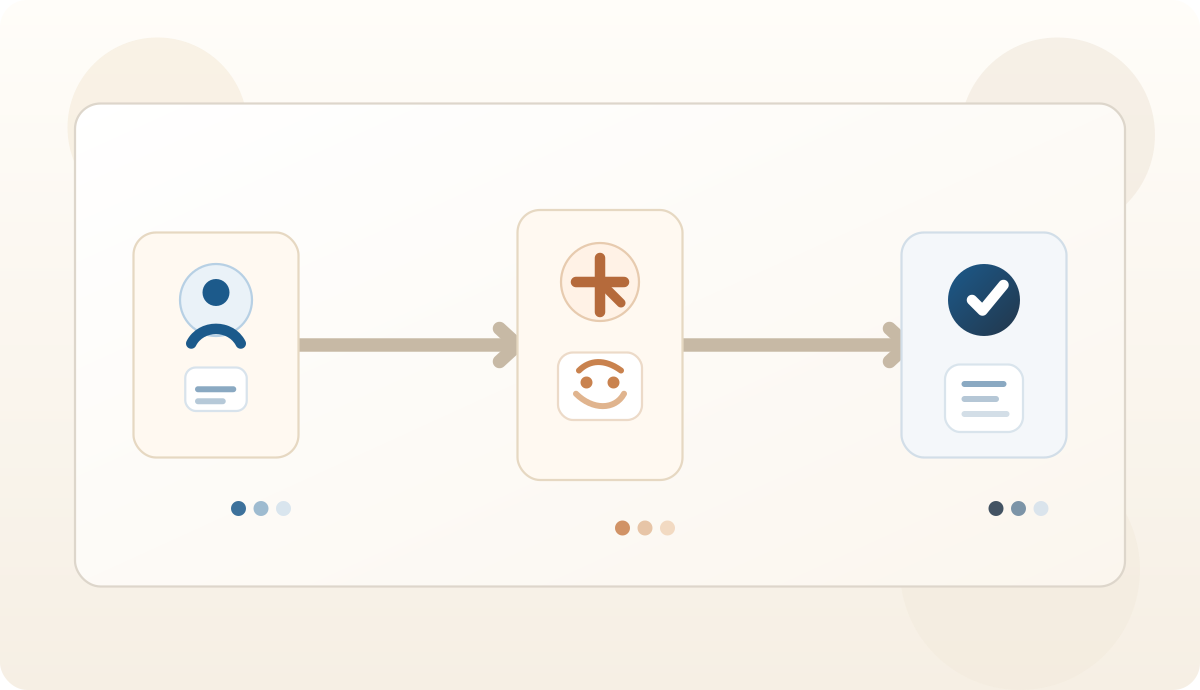
When describing your case, it often helps to separate three stages:
- Attempt stage: you attempted to re-engage with work through reduced, adjusted, or transitional duties.
- Failure stage: despite treatment and accommodations, symptoms/restrictions prevented reliable attendance or safe performance.
- Current stage: treating evidence now supports ongoing incapacity under policy wording.
This structure reduces confusion and makes it easier for decision-makers to understand that a brief attempt at work is not the same as durable recovery.
If you also have workers compensation or income protection
Parallel claims are common, but they raise consistency risk. Different schemes use different legal tests, yet your factual chronology should remain stable across all channels. Keep a single master chronology and use it whenever forms are completed.
Pay special attention to:
- start and end dates for reduced duties;
- how and why hours were adjusted;
- the immediate reason for final work cessation;
- clinical changes around the cessation date.
Where wording differs between forms, make sure the meaning remains consistent. For example, "could do very limited admin tasks intermittently" is different from "fit for office work." Precision matters.
How to make the page's answer usable in your own claim
If you are preparing a claim, turn the short-answer point into evidence rather than argument. Start with your policy definition, then build a one-page summary explaining what the reduced duties actually involved, who approved them, how many hours were attempted, what support was needed, what changed medically, and why the arrangement could not continue. Attach the records that prove each point instead of relying on memory alone.
Useful documents often include rosters, position descriptions, return-to-work plans, capacity certificates, payroll records, leave records, text or email exchanges about restrictions, rehabilitation notes, and treating-doctor letters. If the employer can confirm that core tasks were removed or productivity expectations were lowered, that evidence can help distinguish a genuine failed trial from a stable return to work.
Before lodging, compare the wording used in your TPD forms with any workers compensation, income protection, Centrelink, employer, or medical documents. The legal tests can differ, but the factual story should not drift. If there is a mismatch, explain it directly and neutrally rather than hoping it is missed.
Practical pre-lodgement checklist
- Confirm your exact policy definition and date-of-disablement logic.
- Prepare a clean chronology with documentary support.
- Collect employer evidence of duty modifications and failed sustainability.
- Obtain specialist reports that address function, reliability, and prognosis.
- Review all forms for date and wording consistency before submission.
- Identify gaps likely to trigger requests and fill them early.
Good preparation does not guarantee an outcome, but it usually improves clarity, reduces avoidable delay, and lowers the chance of misinterpretation.
A practical 30-day evidence-tightening plan
If your short reduced-duties attempt ended recently, a disciplined first month can make a meaningful difference to claim quality. In week 1, lock your chronology and gather objective records (rosters, certificates, payroll, leave entries, and treatment dates). In week 2, request an employer letter that clearly distinguishes normal duties from modified duties and explains why the arrangement ended.
In week 3, ask your treating GP and specialist to respond to a focused brief: what work tasks are realistically sustainable over a full week, what restrictions are likely ongoing, and how symptoms or medication side effects affect reliability. In week 4, run a consistency check across all draft forms and supporting documents so dates, job descriptions, and cessation reasons align before lodgement.
This is not about inflating the file with paperwork. It is about reducing avoidable ambiguity. A coherent bundle often leads to fewer clarification requests and a cleaner assessment pathway.
FAQs
Does working for a few weeks automatically disqualify me?
Usually no. A short, failed, reduced-duties period can still be consistent with a TPD claim if evidence shows the arrangement was not sustainable.
What if I worked part-time and then stopped again?
Part-time work does not decide the claim by itself. Decision-makers still assess reliability, duty restrictions, medical support, and policy wording.
Is employer support important?
Yes. Employer records often provide objective detail on modifications, attendance, and why the arrangement ended. That can materially improve clarity.
Should I wait before lodging?
Timing depends on your policy and evidence readiness. Lodging without key specialist evidence can cause delay; waiting too long can create separate issues. A case-specific review is often sensible.
Can an insurer argue my work attempt proves I can work permanently?
They may try. The response is evidence quality: show the attempt context, accommodations, attendance pattern, symptom impact, and why sustainable capacity was not restored.
Important: This page is general information only and is not legal advice. Eligibility and outcomes depend on policy wording, evidence quality, and personal circumstances.
Related guides
Can I claim TPD after a failed return-to-work attempt? · Can I claim TPD after resignation or redundancy? · Can I claim TPD while receiving workers compensation weekly payments? · Can I claim TPD and income protection? · TPD claim readiness checklist · Evidence required for a TPD claim · Any occupation vs own occupation TPD definitions · How long does a TPD claim take?
Need help presenting a short reduced-duties period clearly?
TPD Claims (Stephen Young Lawyers) can help organise chronology, evidence strategy, and communication quality so your work-attempt history is presented accurately and professionally.